
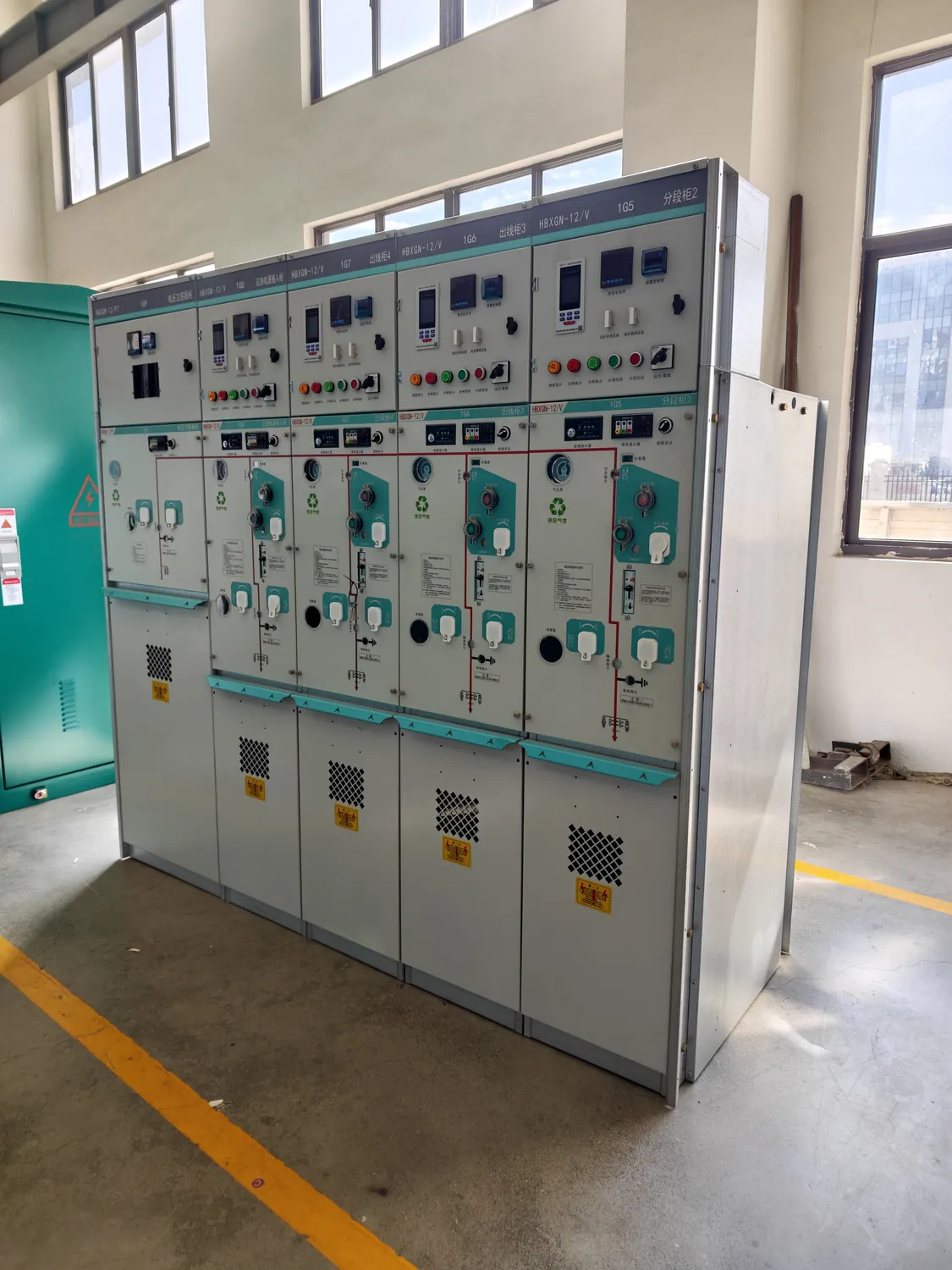
What Is a Ring Main Unit (RMU)? Functions, Types and Ratings
A ring main unit is a compact, sealed assembly of two ring switches and at least one cable or circuit-breaker way, used to connect a medium-voltage distribution ring to a load. It is the standard switching point on 11 kV, 13.8 kV, 22 kV and 33 kV urban loops, industrial parks and collector substations, and it exists because a ring network needs a device that can isolate a section without dropping the ring.
This page covers what an RMU does, the four designs sold today, the ratings that matter at specification stage, and the mistakes that turn a cheap unit into an expensive one.
What an RMU actually does
Three functions are fixed. Everything else is an option.
1. Ring switching
Two ring ways, usually labelled R and L, connect the unit to the incoming and outgoing ring cables. In normal operation one way is closed and the other open or both closed depending on the ring topology, so a faulted cable section can be isolated by opening one switch and back-feeding the healthy side.
2. Load switching and protection
The third way feeds the transformer or the load. It is either a switch-fuse combination, a vacuum circuit breaker with relay, or a load-break switch with a separate protection relay. This way decides what the unit can clear by itself.
3. Earthing
Each way needs a fault-make earthing switch, capable of being closed onto a live cable once, so crews can earth a section before working. Interlocking must make it impossible to earth a way that is still connected to the busbar.
The four RMU designs on the market
| Design | Insulation | Typical voltage | Best fit |
|---|---|---|---|
| SF6 ring main unit | Sealed SF6 tank, busbar and switches inside | 12-24 kV | Standard urban loops, tight vaults, high humidity |
| C-GIS (cubicle GIS) | SF6 or alternative gas in a welded stainless tank | 12-36 kV | 33 kV rings, mines, plants needing 25 kA |
| Solid-insulation RMU | Epoxy cast, vacuum interrupters, no gas | 12-24 kV | Sites with SF6 reporting obligations or very low temperature |
| Hybrid RMU | Vacuum interruption plus gas or solid busbar insulation | 12-36 kV | Projects that must avoid SF6 but keep a compact footprint |
All four are sold as “ring main units” and buyers compare them on price alone, which is the first mistake. The differences show up in footprint, gas reporting, maintenance access and the fault level the unit can interrupt.
The ratings that decide the specification
Six numbers define an RMU. If a quotation does not state all six, it is not a quotation.
- Rated voltage (Um). 12 kV for 11 kV systems, 24 kV for 22 kV, 36 kV for 33 kV. A 13.8 kV system normally takes a 15 kV class unit with 36 kV and 95 kV BIL if ANSI is required.
- Rated current. 630 A is the distribution norm. 1,250 A appears on 33 kV collector units and on busbars feeding several feeders.
- Fault level. 16, 20 or 25 kA for 1 s or 4 s. Utilities increasingly ask 20 kA/4 s on 11 kV rings, which rules out the cheapest switch-fuse designs.
- Power-frequency withstand. 42 kV for 12 kV units, 65 kV for 24 kV, 95 kV for 36 kV, all at one minute.
- Lightning impulse withstand. 75 kV, 125 kV and 170 kV respectively.
- Mechanical endurance. 5,000 operations on the ring switch and earthing switch is the figure our GSRM6 platform is tested to.
The GSRM6 sealed RMU carries 630 A, 20 kA/4 s and 42/75 kV in a 325 mm module at 12 kV, which is the reference point for the numbers above.
Where the unit sits in the network
On a typical urban loop, four to eight RMUs share a ring. Each unit feeds one transformer or one building. A fault anywhere on the ring is isolated by opening the two ring switches either side, and the healthy sections stay energised. That is the whole reason the device exists: continuity, not switching convenience.
For the site types and what each demands, see where gas-insulated RMUs are installed.
Five specification mistakes
Tank extension ordered too late. A sealed tank cannot be extended in the field. If the final module count is not fixed at order, the site pays for a second unit later.
Fault level quoted as a single number. A 20 kA rating with a 1 s duration does not cover a 4 s duty. Both numbers belong in the contract.
Cable boxes treated as generic. Bolted, sliding and elbow types are not interchangeable, and the choice depends on cable size and termination habit.
Gas loss ignored. A 0.1% annual loss per compartment is normal for a welded stainless tank; a poorly sealed unit loses more and the pressure alarm arrives in year three.
No test records clause. Routine test sheets per serial number should ship with the unit. See how each unit is tested.
Short answers
Is an RMU the same as a switchgear panel?
No. A panel is one switching function in a room full of them. An RMU is a sealed multi-way unit that replaces two or three panels and does not need a ventilated room.
Can an RMU be used as a main incomer?
Only if it is ordered with a breaker way and the correct relay. A switch-fuse unit is a feeder device, not an incomer with selectivity.
How long does one last?
Twenty-five to thirty years is normal for a sealed unit that stays dry and is operated a few hundred times. The tank is not the weak point; cable boxes and mechanisms are.
Next in this series: how a gas-insulated RMU is built, step by step inside the plant.
