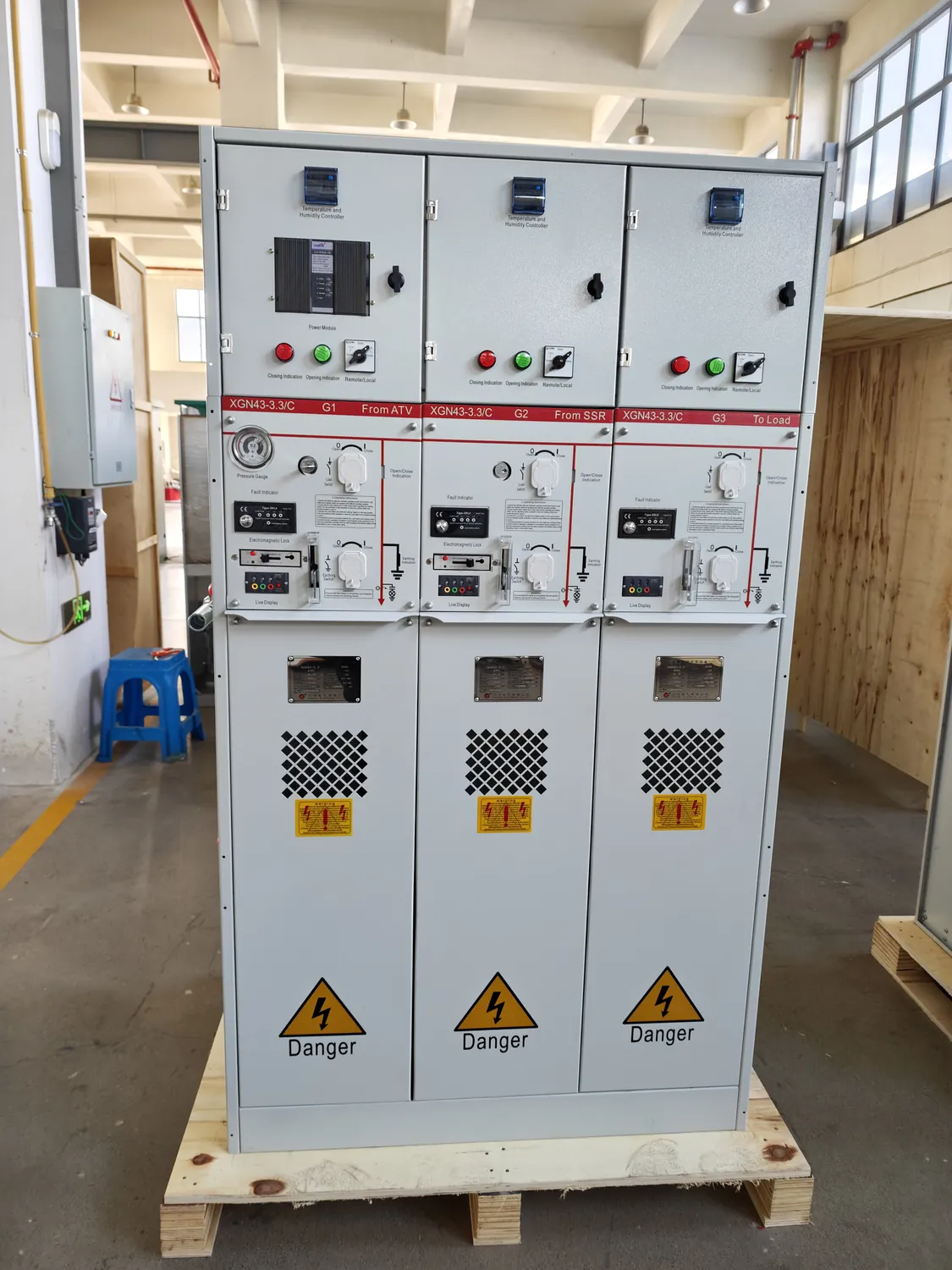
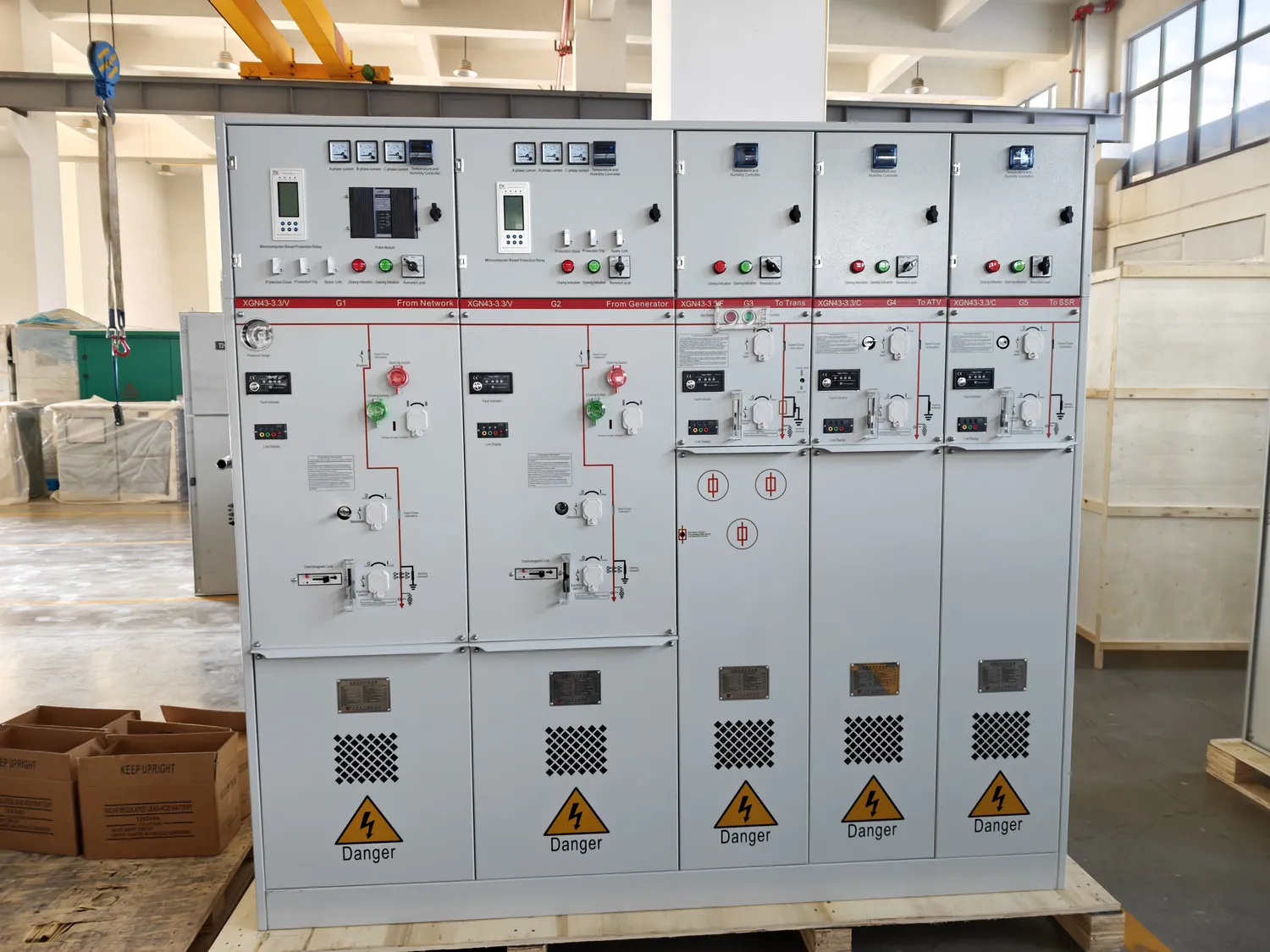
22 kV Gas-Insulated Switchgear
Where 11 kV runs out of capacity in suburban and rural distribution. 65 kV power-frequency, 125 kV lightning impulse (145 kV across the open gap), 630 A, 20 to 25 kA breaking. Modules grow to 375 mm at this class.
Platforms: GSRM6-24 · GSM6-24 unit type · extensible tank, same operating logic as the 11 kV range.
Model selection, module width and outgoing feeders are confirmed against your single-line diagram before quotation.
Where the 22 kV class fits
22 kV sits between urban distribution and sub-transmission: suburban and rural loops, water utilities, larger industrial plants, and 22 kV collector networks in wind and solar farms. It is also the level where many IEC markets stop using air-insulated panels indoors, because the clearances no longer fit a normal electrical room.
At Um 24 kV the tank grows to 375 mm per module and the impulse level rises to 125 kV (145 kV across the open gap). Layout logic is unchanged from the 11 kV range — same operating sequence, same mechanism family — which matters when one client operates both classes on one site.
22 kV switchgear rated data
| Rated voltage / Um | 24 kV (Um 24) |
|---|---|
| Power-frequency withstand (phase–earth / phase–phase) | 65 kV / 65 kV (79 kV across the open gap) |
| Lightning impulse withstand (1.2/50 µs) | 125 kV (145 kV across the open gap) |
| Rated current | 630 A continuous |
| Short-time withstand | 20 kA for 4 s; 25 kA where the fault level requires it |
| Peak withstand | 63 kA |
| Breaking capacity (circuit-breaker modules) | 20–25 kA depending on the module |
| Module width | 375 mm per module |
| Enclosure | IP2X inside the substation, IP67 tank |
| Gas loss | ≤ 0.1 % per year, sealed-for-life tank |
| Standards | IEC 62271-200, IEC 62271-100, IEC 62271-103 |
What decides fit and price at this class
- Check the fault level early. 22 kV networks often carry a higher fault level than 11 kV ones; 20 kA and 25 kA are different breaker modules, not a setting.
- Collector networks. Wind and solar collectors switch frequently — specify mechanical endurance of the load-break switch, not only the current rating.
- Extensibility. Order the tank with busbar capacity for the final module count even if phase one is two modules. Adding a module to a sealed tank later is a factory job.
- Altitude and humidity. Above 1,500 m insulation coordination changes; coastal sites need the IP67 tank and corrosion-resistant hardware as standard.
Questions buyers ask about 22 kV gas-insulated switchgear
Where is 22 kV used instead of 11 kV?
Where load density or distance between substations makes 11 kV uneconomic — suburban and rural feeders, water and wastewater plants, and collector networks for wind and solar farms.
What is the module width at 24 kV?
375 mm per module against 325 mm at 12 kV. A four-module ring position is roughly 1.6 m of busbar width plus cable clearance.
Can a 22 kV RMU be extended later?
Yes, if the tank was ordered with busbar capacity for the final module count. Extending a sealed tank after delivery means returning the unit to the factory.
Which breaking capacity should I specify?
20 kA covers most 22 kV distribution loops. Specify 25 kA where the upstream transformer or the network operator’s fault study says so — the difference is in the breaker module, and so is the price.
Do you offer 24 kV units for export projects?
Yes. Um 24 kV is the European and Asian designation for the same 22 kV system; the datasheet is declared to whichever the project uses.
Related pages