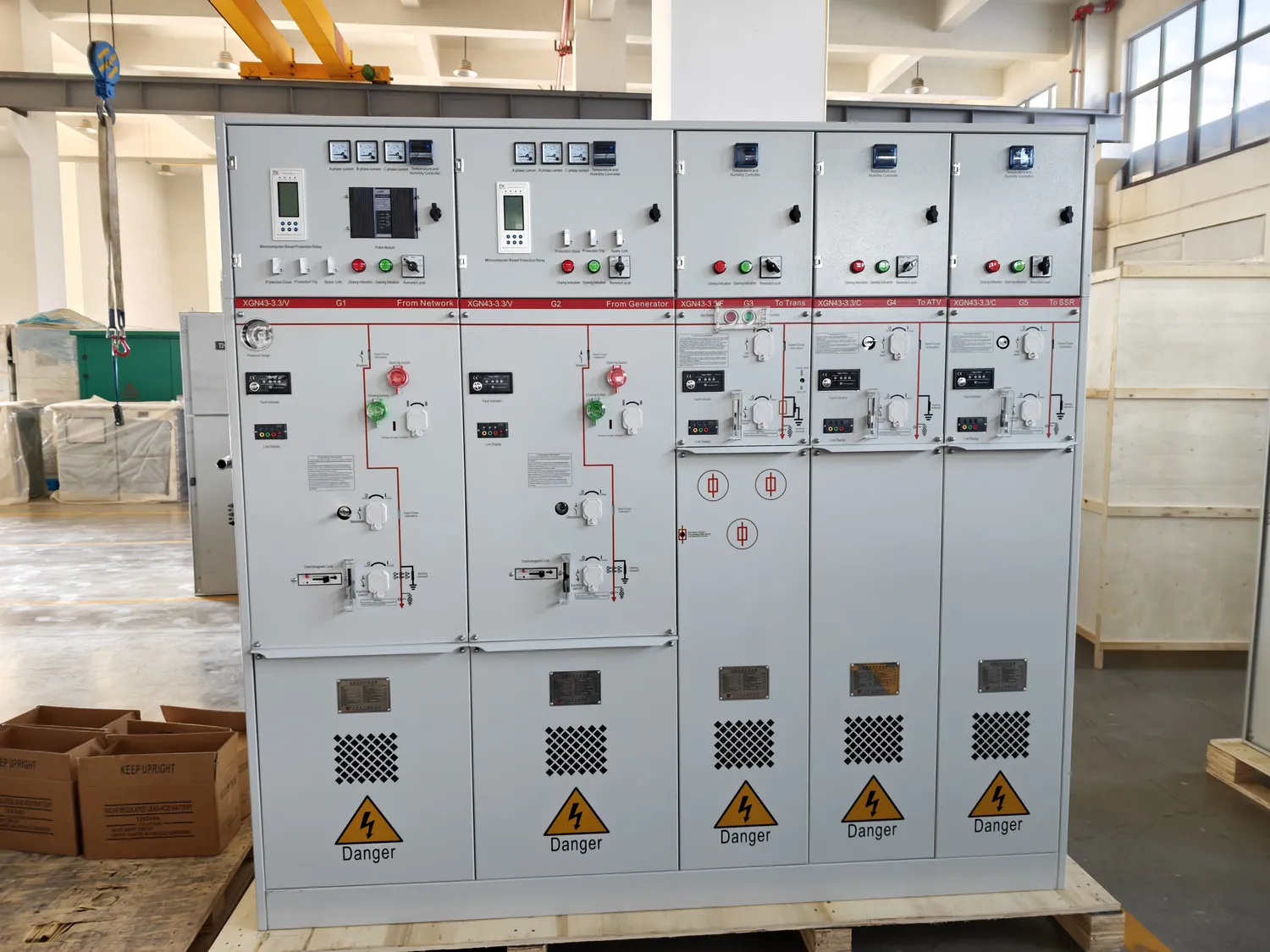
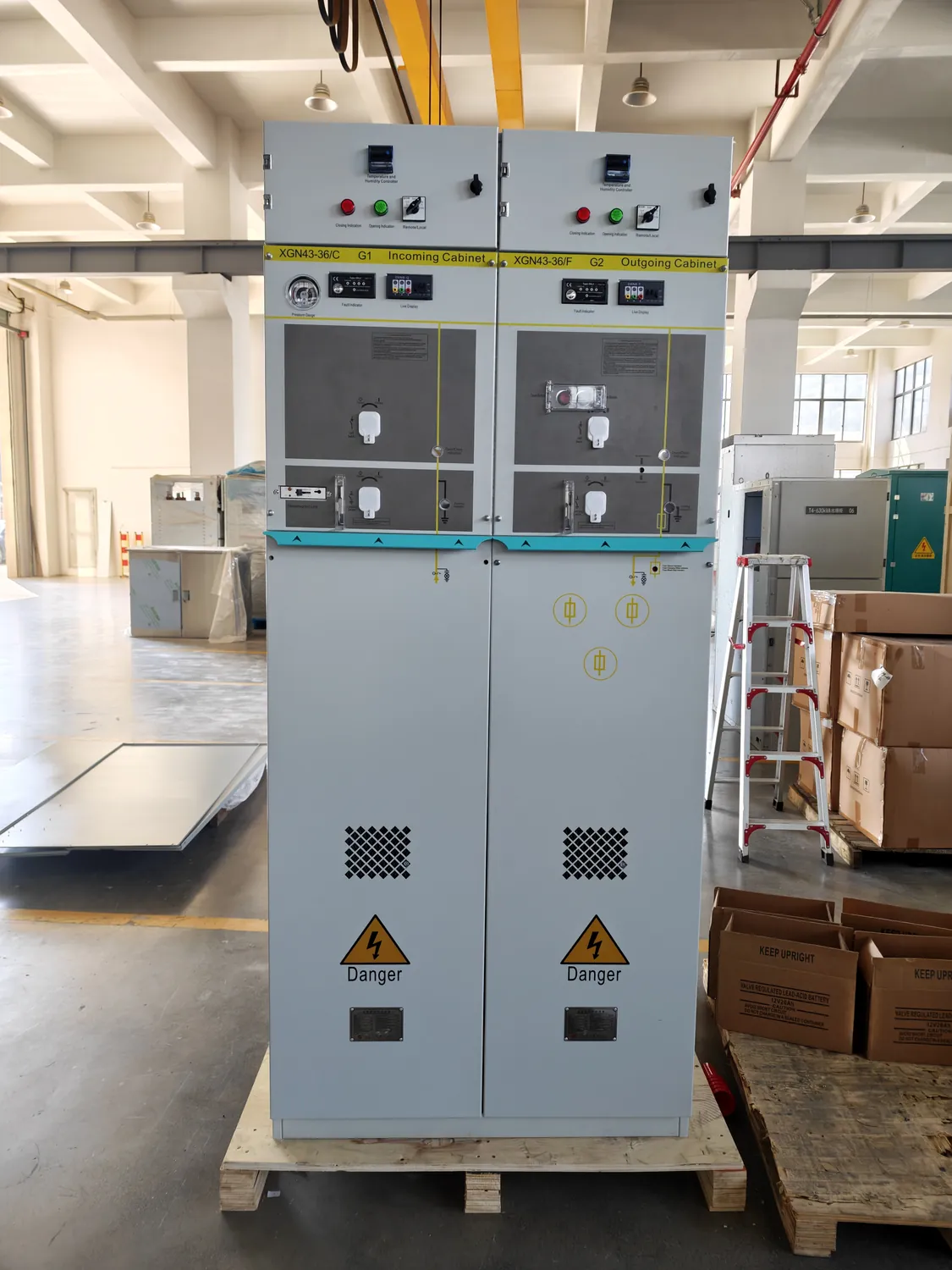
33 kV Gas-Insulated Switchgear
Sub-transmission level for larger plants, mines and 33 kV ring networks — 95 kV power-frequency and 170 kV lightning impulse. Offered as C-GIS in a sealed tank because an air-insulated 36 kV panel needs a room the site usually does not have.
Platforms: GSRM6-36 C-GIS and GSM6-36 cavity units — ratings confirmed against your type-test requirement before quotation.
Model selection, module width and outgoing feeders are confirmed against your single-line diagram before quotation.
Where the 33 kV class fits
33 kV is sub-transmission: larger plants, mines, 33 kV ring networks, utility substations feeding an industrial zone, and renewable connections where the point of interconnection sits above the 22 kV level. At this voltage an air-insulated panel needs clearances and a room most sites do not have, so the sealed C-GIS tank is usually a constraint rather than a preference.
The unit is built as a C-GIS section rather than a small RMU: 95 kV power-frequency, 170 kV lightning impulse, 630 A to 1,250 A, 25 kA short-time withstand. Because dielectric duty is high, internal geometry and gas pressure are fixed per type test — this is the class where the type-test report, not the catalogue, defines what can be delivered.
33 kV switchgear rated data
| Rated voltage / Um | 36 kV (Um 36) |
|---|---|
| Power-frequency withstand (phase–earth / phase–phase) | 95 kV / 95 kV |
| Lightning impulse withstand (1.2/50 µs) | 170 kV |
| Rated current | 630 A to 1,250 A depending on the module |
| Short-time withstand | 25 kA for 3 s |
| Peak withstand | 63 kA |
| Breaking capacity (circuit-breaker modules) | 25 kA symmetrical |
| Module width | C-GIS section width confirmed per layout; typically 600–800 mm per functional section |
| Enclosure | IP2X inside the substation, IP67 tank, IK07 front |
| Gas loss | ≤ 0.1 % per year, sealed-for-life tank |
| Standards | IEC 62271-200, IEC 62271-100, IEC 62271-103 |
What decides fit and price at this class
- Type test before price. At 36 kV the buyer’s type-test requirement — IEC only, or IEC plus a local utility addendum — decides which internal arrangement can be quoted. Send it with the enquiry.
- Current per section. 630 A and 1,250 A sections are different busbar and contact systems; mixing them in one lineup is possible but must be designed, not assumed.
- Arc classification. Internal arc classification and loss-of-service-continuity category (LSC) are declared per arrangement — they cannot be added after the layout is drawn.
- Transport and site assembly. 36 kV sections ship as factory-tested units; check crane and door dimensions before the layout is frozen.
Questions buyers ask about 33 kV gas-insulated switchgear
Is 33 kV the same as 36 kV?
33 kV is the nominal system voltage; Um 36 kV is the rated insulation level of the equipment. A unit for a 33 kV network is built and tested as a 36 kV unit.
Why use C-GIS at 33 kV instead of an air-insulated panel?
Space and environment. An air-insulated 36 kV panel needs roughly three times the floor area and a ventilated room; a sealed C-GIS section fits a compact substation and is unaffected by humidity, salt fog or dust.
Can you supply 1,250 A sections?
Yes, as a designed busbar and contact system. State the current per section on the single-line diagram — 630 A and 1,250 A sections are not interchangeable.
What documents come with a 33 kV enquiry?
Type-test reports on request, routine test records per serial number, gas pressure and leak data, and the internal arc classification for the arrangement quoted.
Do you quote 36 kV units for utility projects?
Yes, provided the type-test requirement is stated up front. Utility addenda differ by country, and the arrangement is confirmed against them before quotation.
Related pages