
Filling a gas-insulated ring main unit looks like the simplest job on the line: connect a hose, open a valve, watch the gauge. In practice the filling bay is where most long-term reliability is won or lost, because the gas that goes in carries whatever moisture came with it, and a dew point of −40 °C at delivery turns into −25 °C after two humid summers if the tank was never properly evacuated. This is the sequence behind SF6 gas filling inside a Yueqing factory, and the numbers we look at before a unit leaves the bay.
What the filling bay actually does
Three operations share the same bench: evacuation, filling, and verification. They are deliberately kept in one room with a logged ambient humidity reading, because a 70% RH day is not the day to open a tank. Each unit has a route card with the target filling density, the gas batch number, and the vacuum and dew point readings written by hand next to the operator’s signature.
The gas itself arrives in cylinders or in a small bulk tank, and is never reused from a reclaimed bottle unless it has passed a moisture and decomposition check. Reclaiming SF6 is normal practice; refilling from an unknown bottle is not.
Vacuum first, gas second
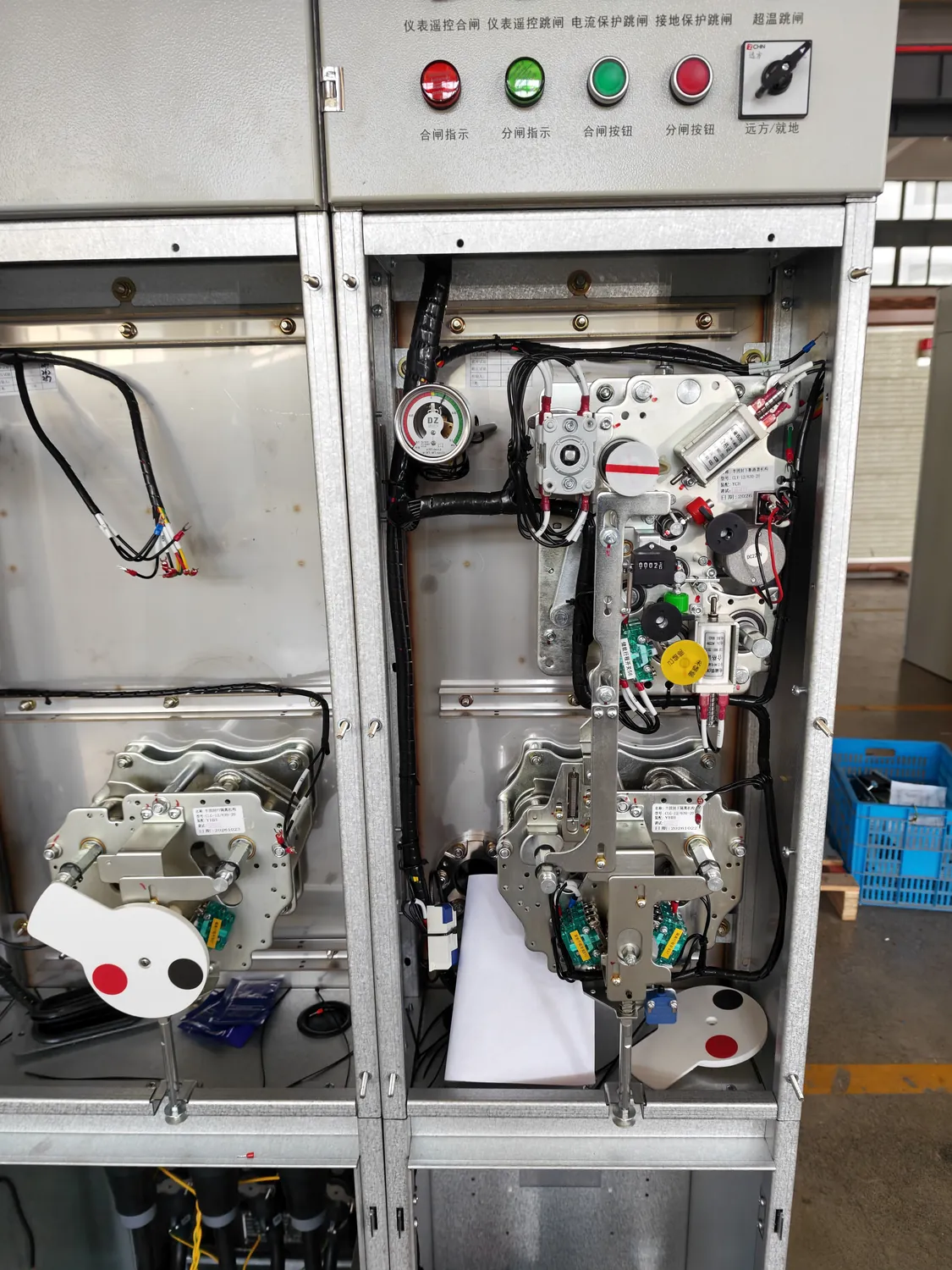
Air cannot be pumped out after the gas goes in. The tank is evacuated to below 100 Pa and held there for a defined period, typically 30 to 60 minutes for a distribution RMU, while the vacuum pump removes both free air and the moisture adsorbed on busbar surfaces and epoxy parts.
How deep the vacuum has to go
The pressure alone is not the acceptance criterion — the hold test is. The pump is isolated, the gauge is watched for ten minutes, and any rise above roughly 130 Pa points to a leak or, worse, to outgassing from a damp internal surface. A rising gauge on a tank that passed its helium test usually means moisture, not a hole, and the cure is a longer vacuum cycle rather than a weld repair.
Filling to the right density, not the right pressure
RMUs are filled by density, not by gauge pressure. The gauge reads whatever the temperature allows, so a tank filled to 0.02 MPa at 15 °C will read 0.045 MPa on a 40 °C afternoon — same gas, different number. Factories therefore use a density relay or a filling rig with temperature compensation, and record the equivalent pressure at 20 °C.
| Check | Target | Why it matters |
|---|---|---|
| Vacuum before filling | < 100 Pa, held 30 min | Removes air and surface moisture |
| Filling density | Per drawing, at 20 °C equivalent | Dielectric strength and arc-quenching margin |
| Moisture (dew point) | ≤ −40 °C at delivery | Prevents arcing by-products and corrosion |
| Oxygen content | < 1000 ppm | Limits decomposition under arcing |
| Leak scan | No signal above 1×10⁻⁶ mbar·L/s | Confirms the seal after filling |
| Annual leakage | ≤ 0.1% of fill | Keeps 30-year fill viable without top-up |
Dew point: the number that predicts the next ten years
Moisture in SF6 does two damaging things. It lowers the dielectric strength of the gas around the insulators, and it combines with arcing by-products to form hydrofluoric and sulphuric acids that attack metal and epoxy. A unit that reads −45 °C when it leaves the factory has margin; one that reads −28 °C is already on the way to a partial discharge problem, even if the pressure gauge looks perfect.
We measure dew point with a chilled-mirror or capacitive sensor tapped from the filling port, after the gas has been allowed to settle, not straight after the valve closes. Readings taken too early are optimistic by five to ten degrees.
Leak scan and the top-up policy
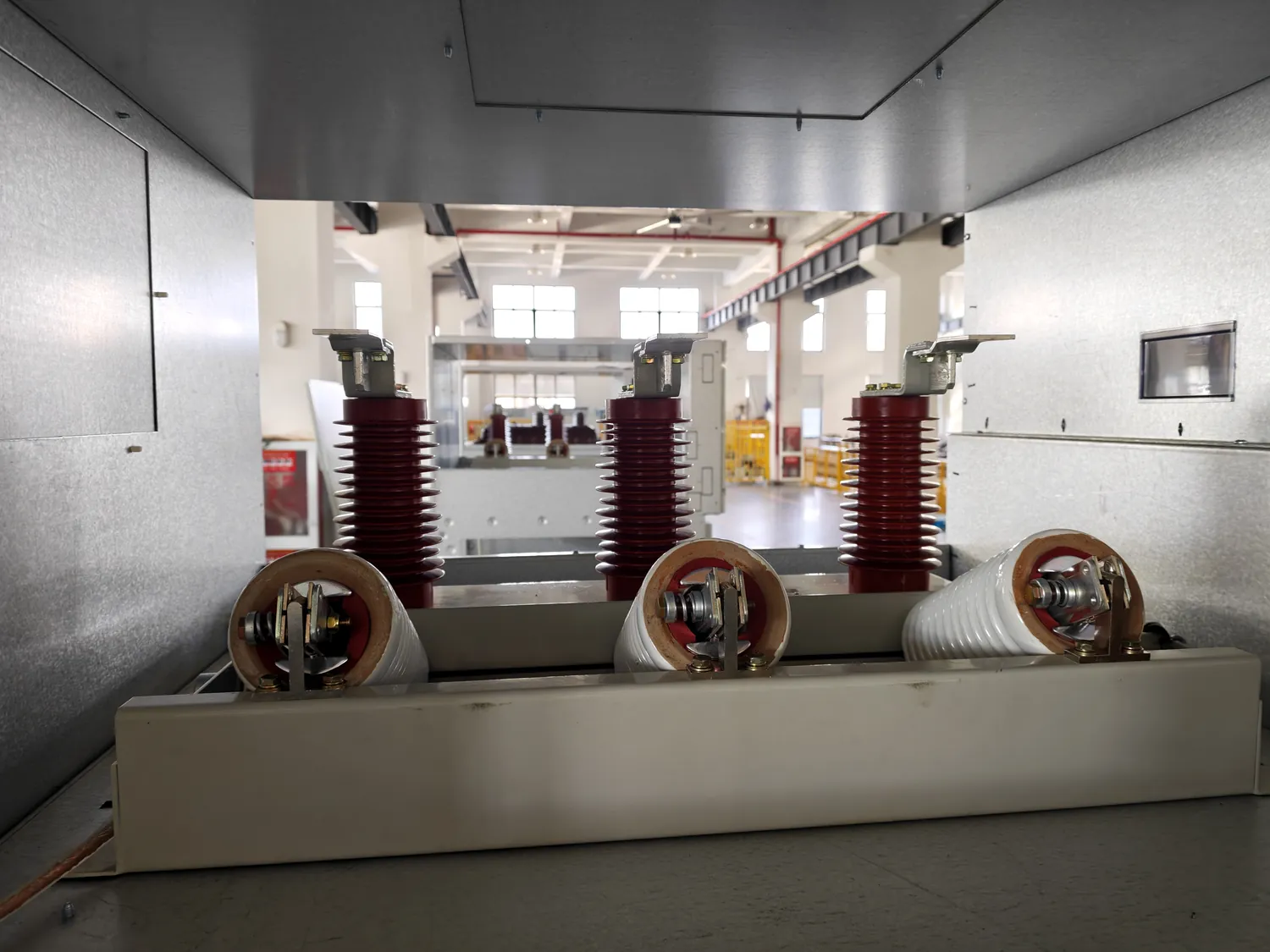
After filling, every flange, bushing seat and the mechanism gland is scanned with a sniffer. The scan is repeated after the routine tests, because thermal cycling moves joints that were tight when cold. Units with an optional pressure gauge or density switch get a 24-hour stabilisation check before packing, which also catches a slow leak that a two-minute scan would miss.
Sealed-for-life designs are filled once and not topped up in service. That promise only holds if the annual leakage figure is genuinely below 0.1%, so the fill record and the leak scan are the two documents that back the warranty. Buyers comparing quotations should ask for both, and should treat “sealed for life” without a leakage number as marketing rather than engineering.
What to specify when you buy
- Dew point at delivery, measured and recorded — insist on −40 °C or better.
- Filling density at 20 °C equivalent, not a bare pressure figure.
- Gas batch number and a purity certificate on the route card.
- Vacuum hold result, including the ten-minute rise.
- Whether the design is sealed-for-life and the guaranteed annual leakage rate.
These five items cost a factory almost nothing to provide and tell you more about its process control than any brochure. On site, the same numbers reappear in the commissioning checklist when the unit is finally energised, on the same GSRM6 hardware that carries a 30-year fill.
FAQ
Why fill by density instead of pressure? Because pressure changes with temperature while the amount of gas does not. Density is the physical quantity that sets dielectric strength, so that is what the drawing and the relay are calibrated to.
Can a unit be topped up on site? A sealed-for-life unit should not need it. If pressure falls, find the leak first — topping up a leaking tank hides the fault and adds moisture with every refill.
How often should dew point be checked in service? At commissioning and then at each scheduled maintenance interval, typically every two to four years depending on the duty and the environment.
Is SF6 still allowed? Yes, as a controlled fluorinated gas with reporting and recovery obligations in most markets. Recovery during service and end-of-life is mandatory, which is why the filling bay keeps a reclaim set next to the fill rig.
What happens if the vacuum hold fails? The tank goes back for a longer evacuation first. If the rise persists, the leak scan and helium test are repeated before any gas is introduced.
Does altitude change the filling numbers? It changes the gauge reading, not the density. Sites above 1000 m need the density relay set per the manufacturer’s altitude table, as covered in the sizing guide.
Electric-GS builds gas-insulated RMUs and GIS in Yueqing, Zhejiang, with evacuation, filling, dew point measurement and leak scanning recorded per serial number. Related fabrication notes appear on the sister site’s switchgear component guide. For a filling record template or a quotation on GSRM6 units, write to info@electric-gs.com or WhatsApp +86 135 8897 8050.
