
A gas-insulated switchgear panel is not built in one pass. It moves down a line: the tank comes from fabrication, the mechanism arrives assembled, the busbars are cut and bent to drawing, the secondary wiring is laced by hand, and only then does the unit get a serial plate and a wooden case. This is the part of the gas insulated switchgear assembly process a buyer never sees in a brochure photograph, and it is where delivery dates are actually made or lost.
From kit to line: how the day is organised
A distribution RMU is built against a works order that names the configuration: two ring switches plus a load-break tee-off, or three functions with a fuse, or a vacuum breaker module for the transformer feeder. Kitting happens the afternoon before, so the assembler starts with everything on a trolley rather than hunting for a bushing at nine in the morning.
Most factories run two or three bays in parallel for standard designs and hold one bay for specials — 36 kV tanks, CT-equipped units, or panels with a specific relay and remote terminal unit. That split is why a 30-unit order and a single prototype should not be quoted on the same lead time.
Busbars, joints and the geometry that decides temperature rise
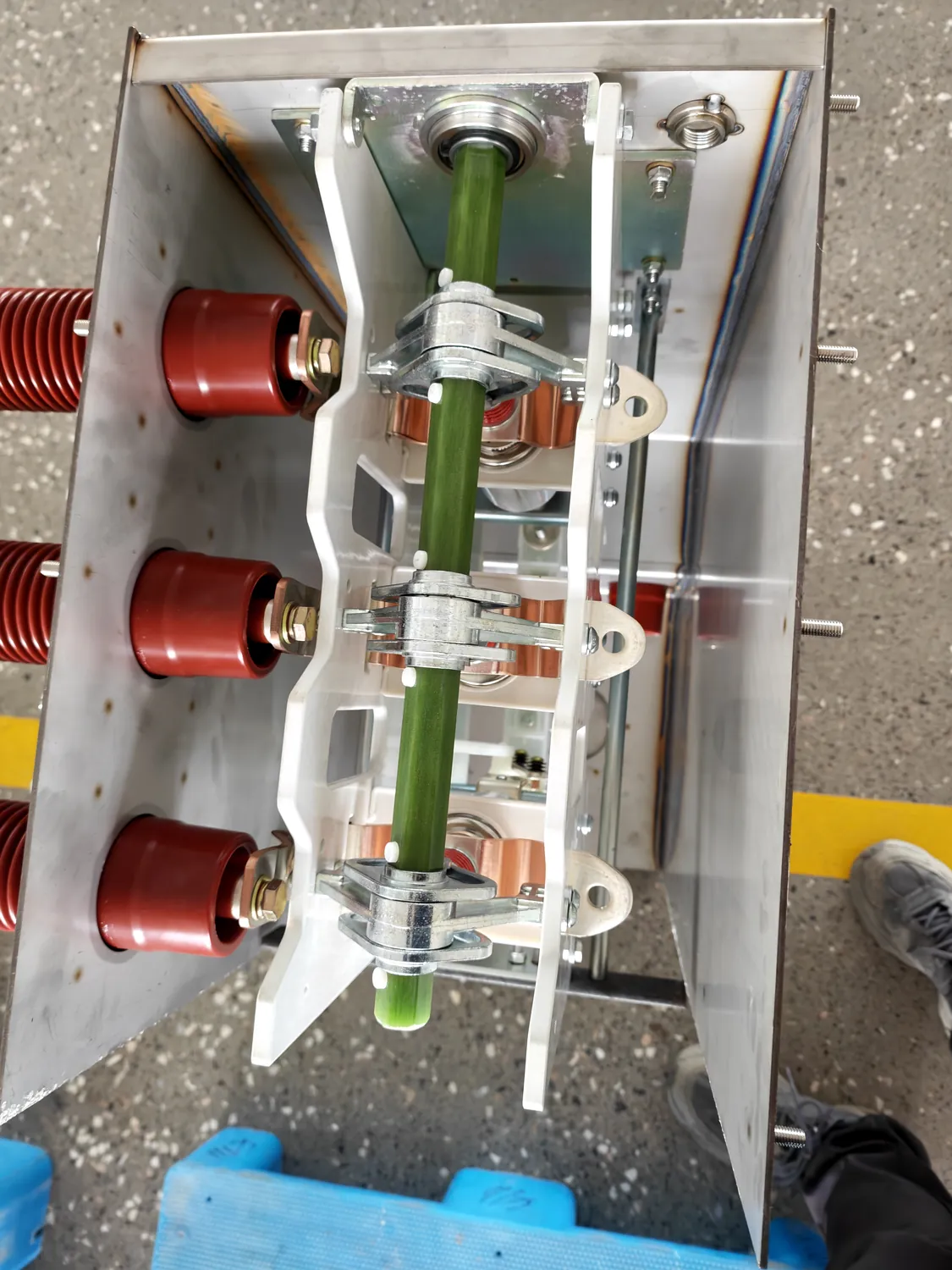
Busbars are cut from electrolytic copper, bent on a CNC bender to the drawing, then deburred and silver-plated at the joint faces. The plating thickness matters more than most buyers realise: 8 µm of silver on a joint that carries 630 A is the difference between a joint that stays at ambient and one that runs twenty degrees hotter.
Joints are bolted to a torque value recorded on the route card and marked with a paint stripe. Disc springs are used where the joint faces are aluminium, because aluminium creeps under load and a joint that was tight in year one is loose in year four.
Secondary wiring, interlocks and the checks nobody sees
Point-to-point before power
Secondary wiring is the part that generates the most site call-outs, and almost all of it is preventable. Wires are cut to length against a schedule, ferrules are printed with the terminal number from the same drawing, and the loom is laced rather than left loose. Before the panel is closed, a technician rings out every core against the schematic — not sampling, every core.
Interlocks get a separate functional test: the earthing switch must not close while the load-break switch is closed, the cable compartment cover must not open with the switch in the closed position, and the mechanism must not accept a closing command with the spring uncharged. Each is checked by trying to defeat it, not by reading the drawing.
Factory acceptance test and the customer’s hour
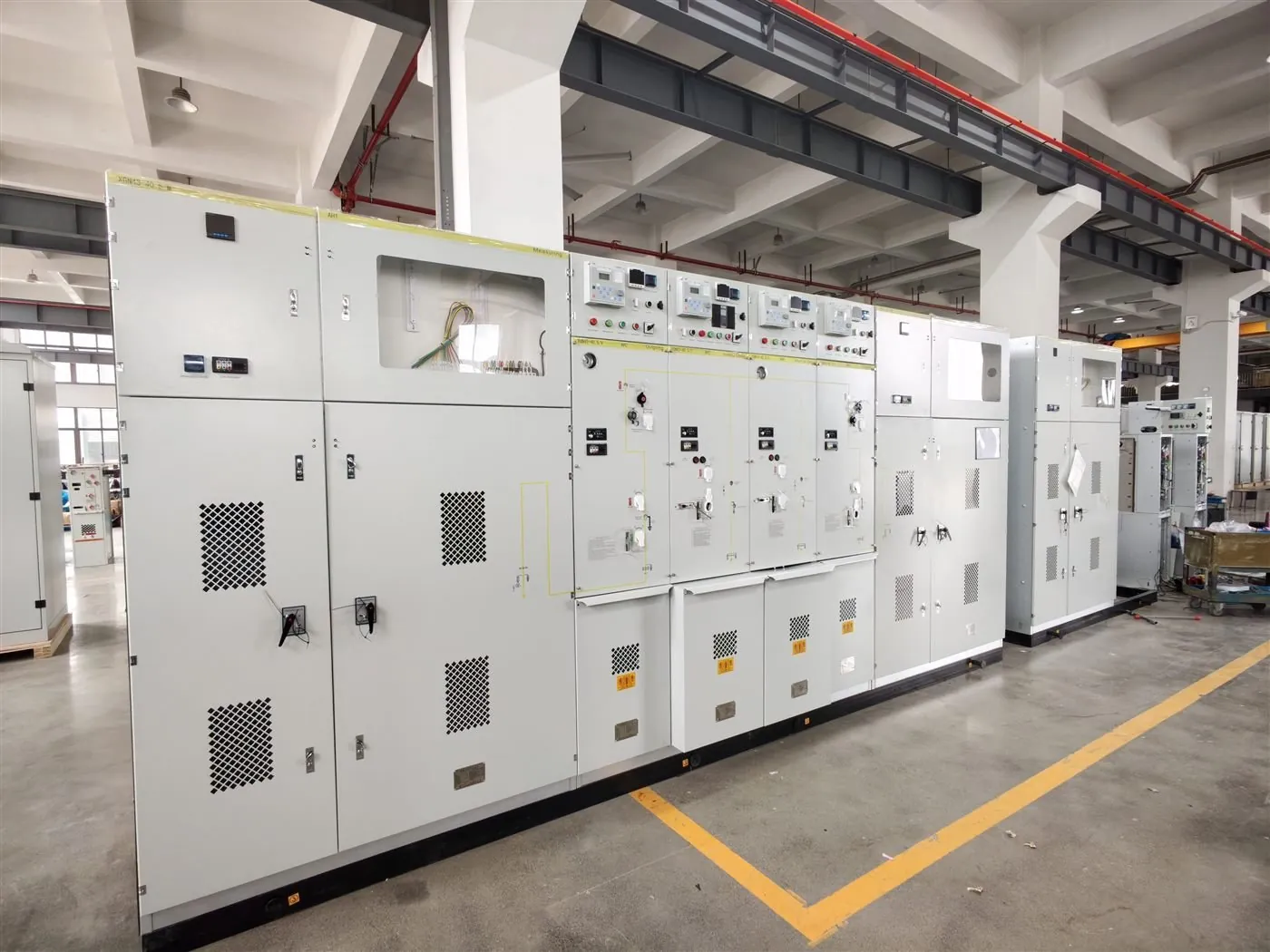
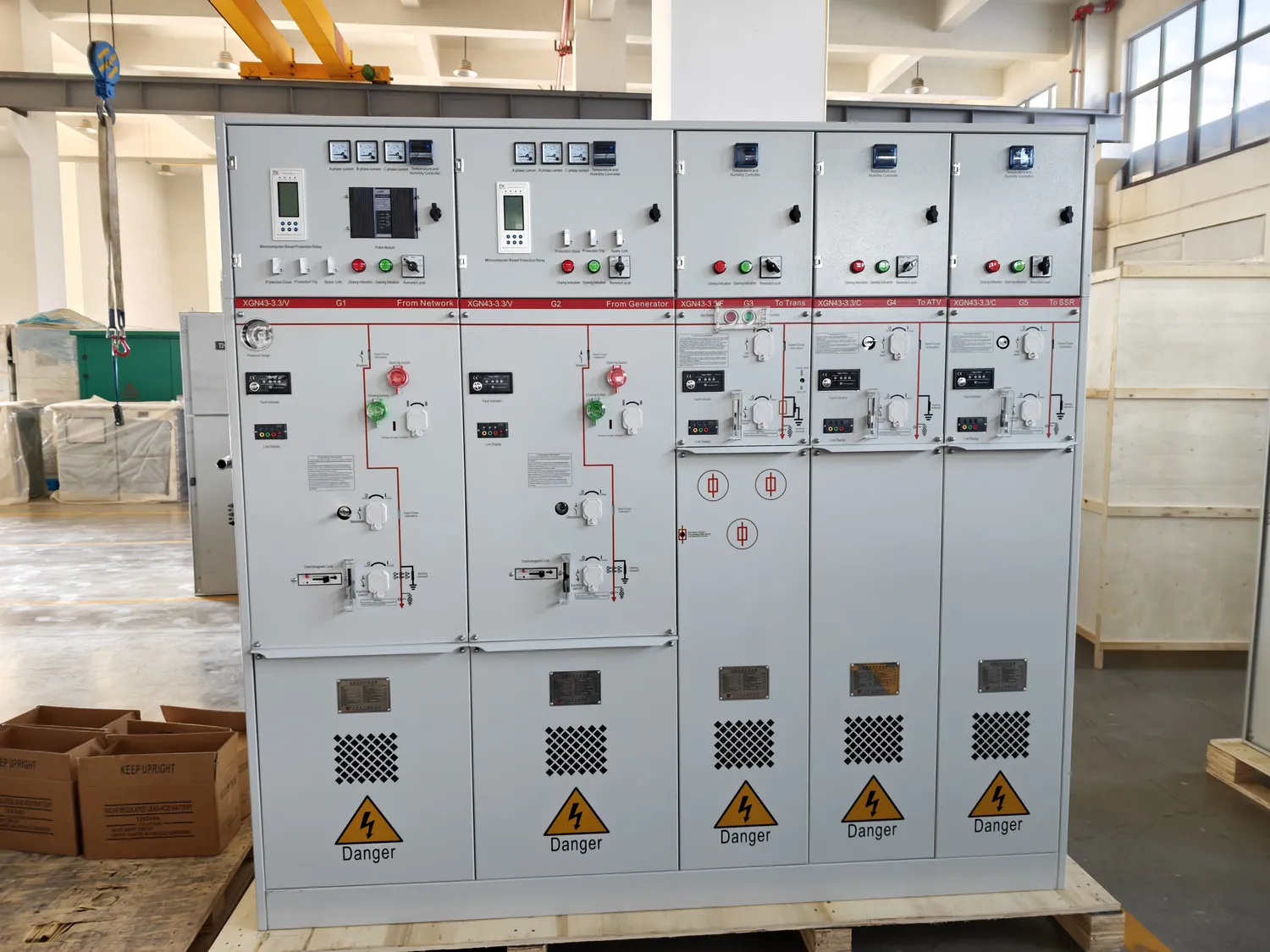
Before packing, the unit runs the routine test sequence — voltage withstand, partial discharge, resistance, gas tightness, mechanical operations — and, on larger orders, a multi-panel lineup test with the customer’s engineers present. The witness test is mostly about the lineup: do the panels bolt together with the busbar links fitting without force, do the mechanical interlocks between adjacent units work, does the mimic diagram on the front match the single-line drawing.
That hour is also when configuration mistakes surface: a relay set to the wrong curve, a CT ratio that does not match the protection schedule, a control voltage of 110 V DC where the site is 220 V. Fixing them in the factory costs a wire; fixing them on site costs a flight.
Packing for a sea voyage
Packing is where inland factories lose export orders. A panel that survives a truck ride can still arrive with a bent frame after forty days in a container with 80% humidity and a condensate cycle every night.
| Item | Standard practice | Why |
|---|---|---|
| Base | Wooden pallet with 100 mm skids | Forklift access, keeps the frame off the floor |
| Wrap | Vacuum aluminium foil plus desiccant | Blocks condensation during temperature swings |
| Crate | Plywood case, fumigated or heat-treated | ISPM 15 compliance at destination |
| Anchoring | Bolted to the pallet, not strapped | Prevents shift in heavy seas |
| Spares | Fuses, handles, keys in a marked box | Site team can energise without hunting |
| Documents | Test reports and drawings inside the panel | Customs and commissioning both need them |
Units are also strapped with the mechanism locked and the earthing switch closed, so nothing moves in transit. A small but telling detail: the serial plate should be readable through the wrapping, otherwise the site team opens every crate to find one panel.
What to ask before the container is booked
- Is the lineup tested as a lineup, or as individual panels?
- Who signs the FAT report, and does it include measured values?
- What desiccant quantity and foil specification are used per crate?
- Are the shipping documents inside the panel or in a separate pouch?
- What is the realistic lead time for a special configuration, not the catalogue figure?
Answers to these five questions separate a factory that ships regularly from one that has shipped once. The same discipline carries into installation, from the RMU configuration onward and through the product range, and where the pre-energisation checklist picks up the threads the factory left.
FAQ
How long does assembly take per panel? For a standard RMU, two to three days of assembly and wiring, plus a day in test and packing. Specials with CTs and relays take longer because the secondary work grows.
Is the lineup test mandatory? For multi-panel orders it should be. Single panels are tested individually; a four-panel lineup that has never been bolted together is a commissioning risk.
Can I send my own inspector? Yes, and most factories expect it on export orders. Book the slot when the works order is released, not when the panels are finished.
What is the usual lead time? Six to eight weeks for standard RMUs, ten to fourteen for specials, plus shipping. Anything quoted under four weeks usually means the panels are already on the shelf.
How are spare parts packed? In a marked box on the pallet, with a list taped inside the crate lid. Fuses and handles are the items most often forgotten.
Electric-GS assembles, wires, tests and packs gas-insulated switchgear in Yueqing, Zhejiang, and ships to project sites across Asia, Africa and the Pacific. Fabrication details shared with the group’s other plants appear at electric-cn.com, and panel-level assembly questions are answered in the component guide on electric-gs.com. For a works order schedule or a packing specification, write to info@electric-gs.com or WhatsApp +86 135 8897 8050.
