
A gas-insulated ring main unit lives or dies by one component: the sealed stainless tank that holds the busbars, the switching contacts and the insulating gas. Every rating printed on the nameplate — 12 kV, 24 kV, 630 A, 20 kA — is only as good as the weld that keeps the gas in. This walk-through of the RMU tank welding and sealing route follows the enclosure through a Yueqing factory, from a flat sheet of 304 stainless to a tank that holds pressure for thirty years.
Why the tank decides everything else
The enclosure does three jobs at once. It carries the internal arc pressure, it keeps the gas and the moisture out, and it gives the bushing and mechanism a rigid datum so the contacts stay aligned after ten thousand operations. A tank that leaks 1% of its fill per year will fail a dew point check long before it fails a pressure check, because moist air enters faster than SF6 leaves.
That is why most quality problems blamed on “the gas” or “the switch” actually start in fabrication: a weld undercut, a warped flange, a sealant applied over an unclean surface. Buyers who audit a factory should spend their time here, not on the paint booth.
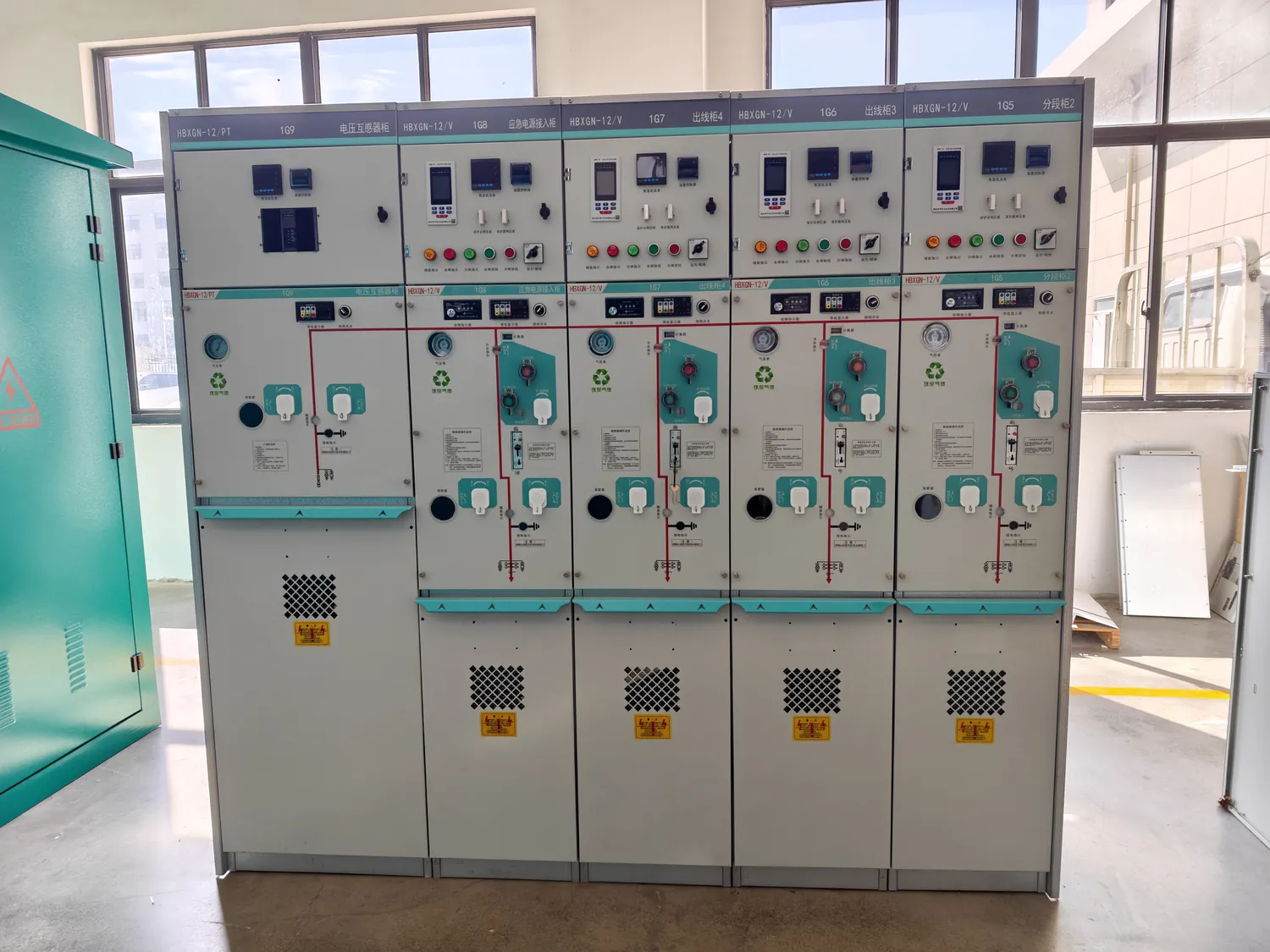
Step 1: Cutting and forming the shell
Tanks for distribution RMUs are usually 3 mm 304 stainless, sometimes 4 mm for 36 kV designs. Sheets are laser cut from a nesting program so the same drawing produces the same blank every time, then folded on a press brake. The fold radius matters: too tight and the grain structure work-hardens, inviting cracks during the pressure test.
Flange faces and bushing seats
Flange faces are machined after folding rather than before, so flatness is measured on the finished part. A 0.05 mm step at a bushing seat is enough to leak under 0.4 MPa. Seats are checked with a dial gauge and logged against the tank serial number.
Step 2: Welding the enclosure
Two processes dominate: TIG for the thin corner joints, and plasma or laser for long straight seams. The welder works to a qualified WPS, with the current, travel speed and shielding gas recorded on the route card. Stainless needs back purging, otherwise the root side oxidises and the seam becomes a corrosion site from day one. The same discipline governs the busbar joints described in the RMU construction overview.
| Parameter | Typical setting | Why it matters |
|---|---|---|
| Base material | 304 stainless, 3 mm | Corrosion resistance, no plating needed |
| Corner joint | TIG, 60–80 A, argon purge | Full penetration without burn-through |
| Long seams | Plasma or laser, keyhole | Low distortion, single pass |
| Distortion limit | ≤ 1.5 mm over 1 m | Keeps bushing and mechanism alignment |
| Leak test | Helium, 0.4 MPa, 30 min hold | Finds leaks below 1×10⁻⁶ mbar·L/s |
| Surface finish | Pickled and passivated | Removes heat tint, restores passive layer |
Step 3: Inspecting and leak-testing before assembly
Every tank is visually inspected for undercut, porosity and heat tint, then dye-penetrant tested on the critical seams around the bushing seats and the mechanism opening. Only after that does the helium leak test run: the tank is filled with a helium-nitrogen mix, sprayed on the outside, and any signal above the threshold sends the shell back for rework. The test is repeated after internal assembly, and again after routine testing, because a tank that passes empty can still leak once it is loaded with busbars and warmed by a temperature rise run.
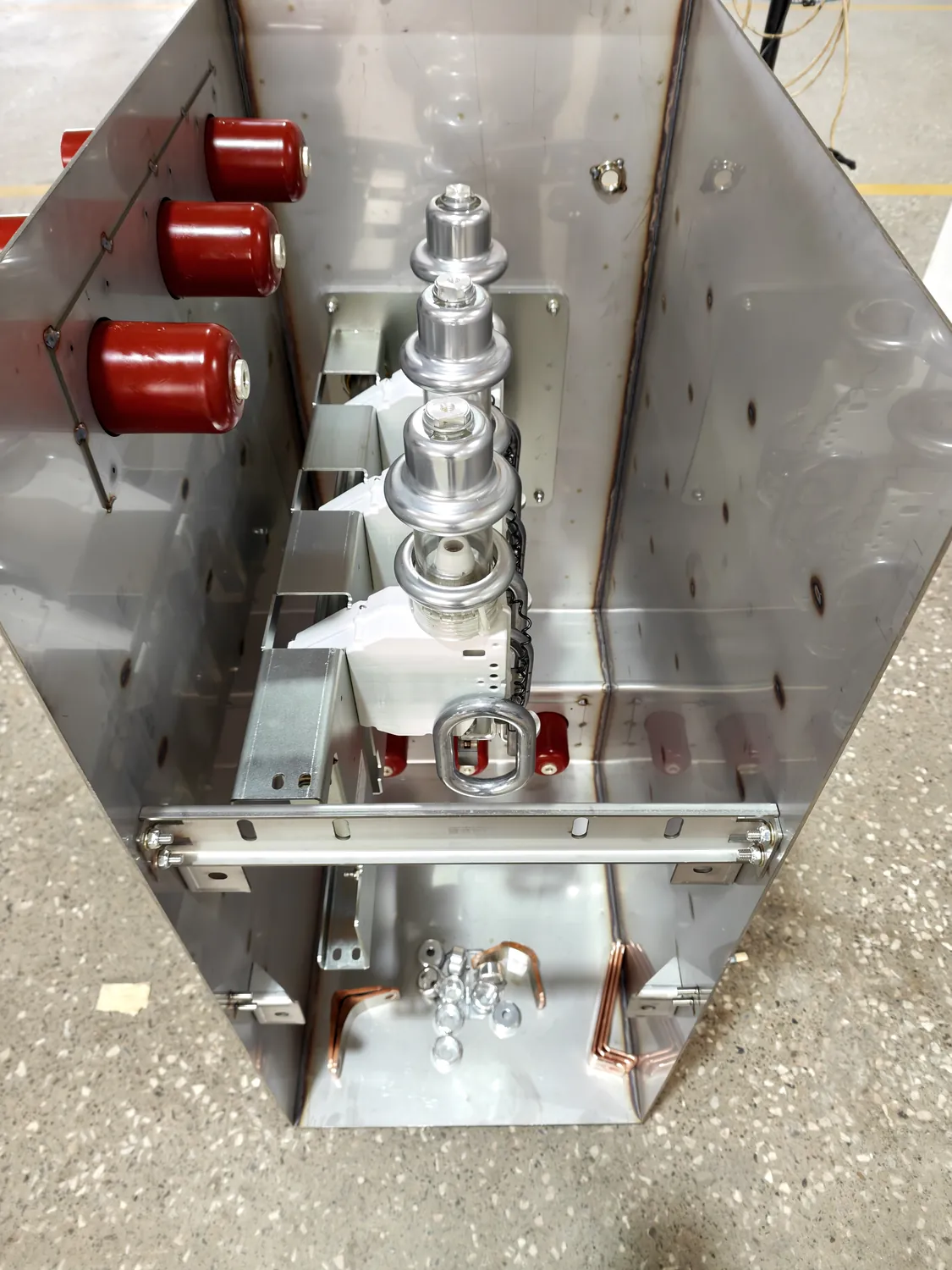
Step 4: Internal assembly, sealing and the final pressure check
Inside the tank the factory installs the three-position load-break switch, the earthing contact, the busbar system and, where specified, the fuse holder for the transformer circuit. Assembly happens in a temperature and humidity controlled bay, and the tank stays open only for the minutes needed — every hour of exposure adds moisture the vacuum process later has to remove. Busbars are bolted and torque-marked so a later audit can see whether a connection has moved, and contact alignment is measured rather than eyeballed.
Bushings and the mechanism gland are the two places where a gas tank most often leaks. Epoxy bushings are seated with a controlled preload, and the mechanism shaft uses a double-lipped seal with a grease reservoir between the lips. After sealing, the tank is evacuated and held under vacuum to drive off moisture, then filled and left to stabilise before pressure and dew point readings are taken. Only then does the unit face power-frequency voltage, partial discharge measurement and a final leak scan — the sequence covered in the pre-energisation checklist from the buyer’s side, and the build sequence behind it at how a gas-insulated RMU is built.
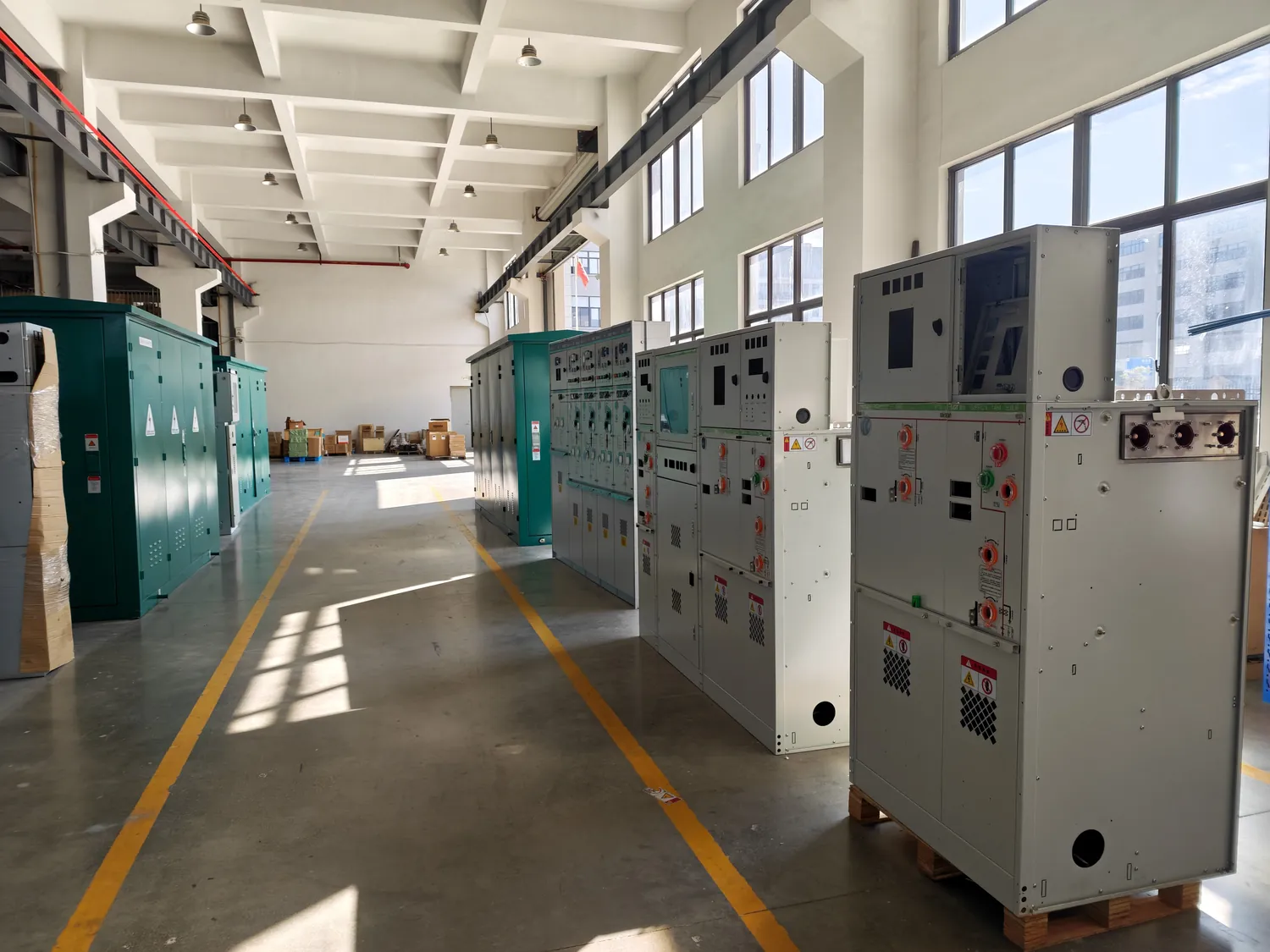
What to ask a factory before you order
- Which welding process, and is there a qualified WPS for the tank?
- Is the helium leak test done on the empty shell, and again after assembly?
- What is the guaranteed annual leakage rate — 0.1% or 0.5% per year?
- Are weld maps and test records shipped with the unit, tied to the serial number?
- How is the tank passivated, and is the heat tint removed or merely brushed?
A factory that answers these with numbers has been audited before. One that answers with adjectives has not. The ratings on the plate follow the same logic — compare them against the nameplate rating guide and the tank data sheet side by side before you sign.
FAQ
Is the tank always stainless steel? For distribution RMUs, yes in most designs. Some 36 kV tanks use aluminium to save weight, but aluminium needs more care at the weld and cannot be passivated the same way.
How long should a tank hold gas? A well-built sealed-for-life tank loses well under 0.1% per year, which is why 30-year fills are offered without top-up. Anything above 0.5% per year points to a sealing problem.
Can a leaking weld be repaired on site? Rarely. A gas leak at a seam means the tank returns to the factory for rework and a repeat helium test. Field patching is a temporary measure at best.
Why test with helium instead of air? Helium molecules are small enough to find leaks that air pressure would miss at the same test pressure, and the mass spectrometer gives a number rather than a bubble.
Does the internal arc rating depend on the tank? Yes. The enclosure contains the pressure rise during an internal arc, so tank thickness, weld quality and pressure relief design are part of the IAC classification, not a separate detail.
What records should come with the tank? Material certificate, weld route card, helium test log and the dew point reading at filling — ask for them by serial number, not as a generic sample pack.
Electric-GS is an OEM/ODM switchgear factory in Yueqing, Zhejiang, building gas-insulated RMUs, GIS, vacuum circuit breakers and compact substations for export projects; tank fabrication, assembly and routine testing all happen under one roof, so weld records travel with the unit. Sister plants in the same group publish their own fabrication notes at electric-cn.com. For drawings or a factory audit checklist, write to info@electric-gs.com or message WhatsApp +86 135 8897 8050.
