
SF6 vs Solid-Insulation RMU: Which Fits Your Vault
Both designs do the same job on an 11 kV or 22 kV ring. The decision is not environmental ideology; it is footprint, fault level, maintenance access, gas reporting and the temperature the site actually sees. Here is how the two compare when a buyer has to sign a specification.
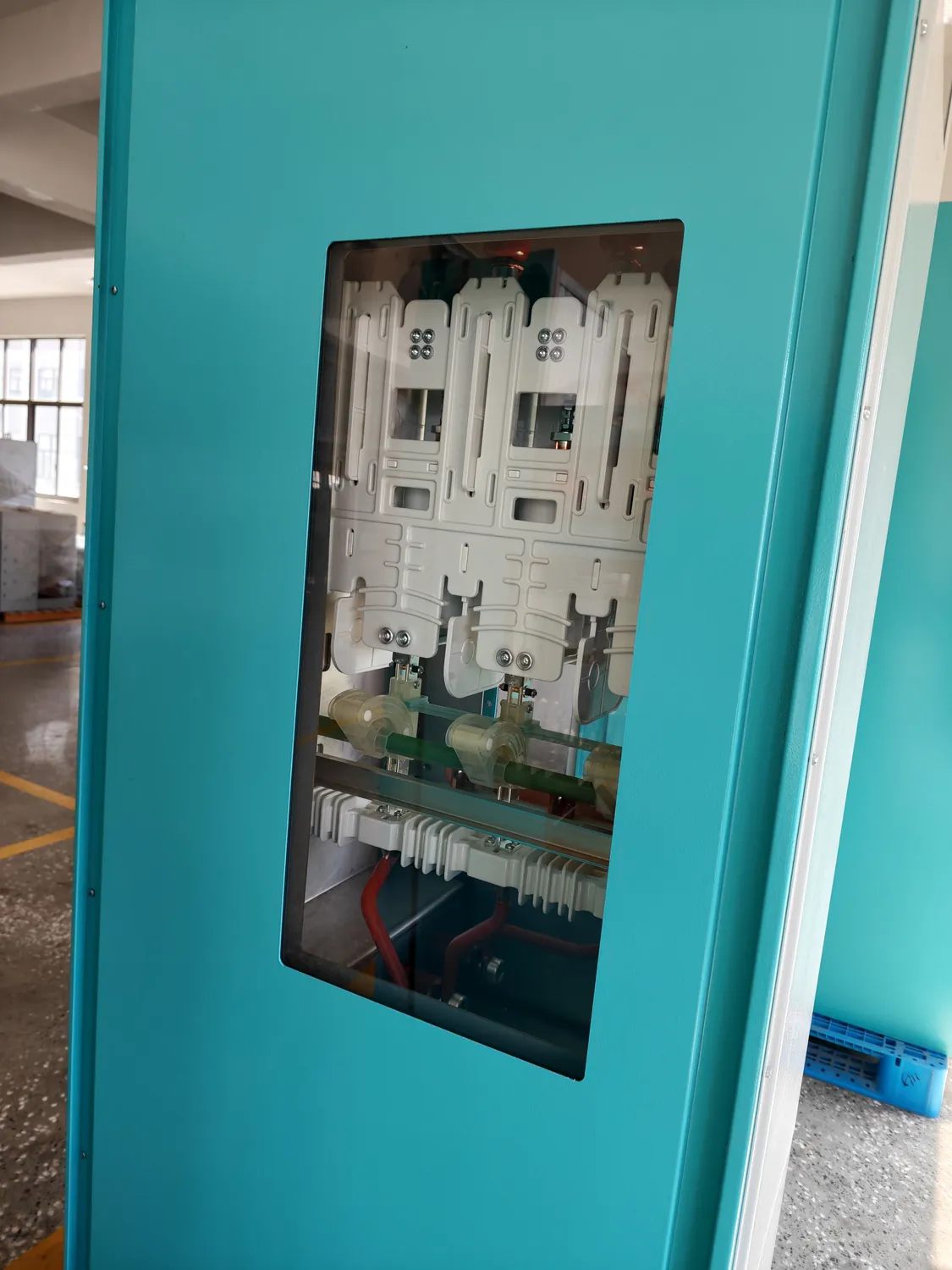
The engineering difference in one paragraph
An SF6 RMU puts the busbar, ring switches and earthing switches inside a sealed stainless-steel tank filled with sulphur hexafluoride at low pressure. The gas does two jobs: it insulates and it extinguishes the arc. A solid-insulation RMU casts the busbar and the switch chambers in epoxy and uses vacuum interrupters to break current, so no gas is present and no pressure needs monitoring.
| SF6 RMU | Solid-insulation RMU | |
|---|---|---|
| Footprint (12 kV, 3 ways) | 325 mm modules, very compact | Typically 20-40% wider per way |
| Fault level | Up to 20-25 kA/4 s | 16-20 kA typical, 25 kA on larger frames |
| Gas reporting | F-gas registers, leak checks, recovery at end of life | None |
| Low temperature | Gas pressure falls with temperature; heaters may be needed below -25 °C | Epoxy is unaffected by cold, but can crack under thermal shock |
| Humidity and pollution | Sealed tank is immune; the cable box is the exposed part | Epoxy surfaces are exposed to humidity and pollution, creepage matters |
| Field repair | Limited: tank opening needs gas recovery and a clean workshop | Limited too, but partial replacement is easier |
| Price, 3-way 12 kV | Lower per kA | Higher for the same rating |
Where SF6 still wins
Tight urban vaults. When the room was built for air-insulated panels and the operator wants to add feeders, a 325 mm module is the only thing that fits without civil works.
High fault levels. A 20 kA/4 s duty on an 11 kV ring is routine for a sealed tank and marginal for a compact solid unit.
Polluted or flooded sites. A sealed tank does not care what the room looks like; solid insulation does, because the epoxy surface is the external insulation.
A sealed tank does not care what the room looks like. Solid insulation does, because the epoxy surface is the external insulation.
Where solid insulation wins
SF6 reporting obligations. If the operator must keep an F-gas register, train staff on leak checks and pay for gas recovery at decommissioning, the administrative cost can exceed the price difference over 25 years.
Very cold sites. Below about -25 °C, SF6 pressure drops enough that heaters and interlocking become part of the design. Epoxy does not have that problem.
Small rings with low fault level. A 16 kA, three-way unit on a suburban loop does not need gas to meet its duty.
The hybrid option buyers forget
A hybrid RMU uses vacuum interrupters for current breaking and keeps a small amount of gas or solid insulation for the busbar. It gets close to the sealed-tank footprint while cutting the gas charge by most of its volume. If the specification says “avoid SF6 where practicable”, hybrid is usually the cheapest compliant answer.
Five questions to settle before signing
1. What is the fault level and its duration? kA without seconds is an incomplete requirement.
2. Who maintains the gas register? If the answer is “the client”, price the training and the recovery kit into the project.
3. What is the minimum site temperature? Check the recorded winter minimum, not the design average.
4. Is the room ventilated? Both designs need clearance, neither needs a ventilated room; but a gas unit needs access for pressure checks.
5. Which cable box type? Bolted, sliding or elbow, decided by cable size and by the crew’s habit.
Both designs are covered by IEC 62271-200 and both must pass the same routine tests: power-frequency withstand, partial discharge, gas leak (if gas), mechanical operation. See the routine test sequence for what the sheets should contain.
Decision rule in one line
If the vault is tight or the fault level is 20 kA and above, take the sealed SF6 or hybrid unit. If the site is cold, the ring is small, or the operator refuses gas administration, take solid insulation.
Compare the actual module widths on the 11 kV and 22 kV pages, or start from the full range.
