
RMU vs VCB Switchgear: Where Each Belongs
Both switch medium-voltage circuits and both are sold as “switchgear”, which is why buyers compare them on price and then discover they are solving different problems. The short version: an RMU is a ring device with limited fault clearance; a VCB panel is a protection device with full fault clearance and selectivity.
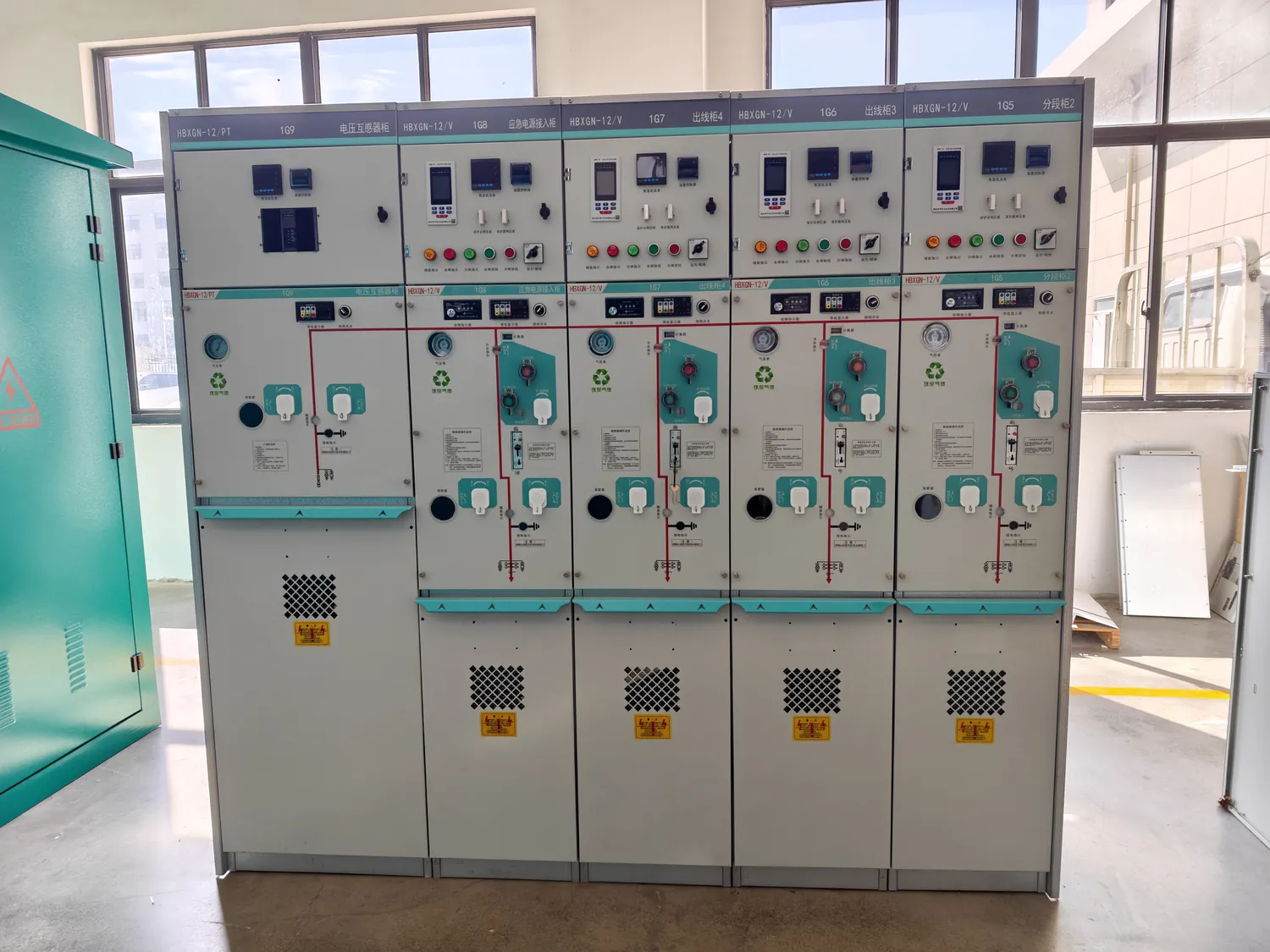
What each is built to do
RMU. Two ring ways plus one or two load ways, sealed, usually 630 A, fault level 16-25 kA. Its protection is a fuse or a single relay on the load way. It is designed to be installed close to the cable, in a small room or a kiosk, and operated rarely.
VCB panel. A metal-clad or metal-enclosed cubicle with a vacuum circuit breaker, a protection relay with settings, and usually metering. Fault level 25-40 kA, currents to 1,250 A or more, and it is designed for a substation room with busbars, earthing and interlocking between panels.
| RMU | VCB panel | |
|---|---|---|
| Primary job | Ring switching, isolation | Protection and selective tripping |
| Fault clearance | Fuse or single relay way | Relay with full settings and curves |
| Typical fault level | 16-25 kA | 25-40 kA |
| Footprint per way | 325-375 mm | 600-800 mm, plus room for busbars |
| Metering | Optional module | Standard |
| Maintenance | Sealed, minimal | Accessible, breaker removed for service |
| Cost per way | Lower | Higher |
Where the RMU is the right answer
Distribution rings. The unit exists to keep a ring alive while a section is isolated. A VCB panel in the same location adds protection the ring does not need and occupies space the vault does not have.
Kiosk and pad-mounted substations. A sealed unit outdoors or in a small kiosk needs no ventilated room and no busbar assembly.
Collector substations for wind and solar. Dozens of small units spread over a site; each one switches a feeder and isolates for maintenance. See application notes.
Where the VCB panel is the right answer
Incoming feeders with selectivity. If a fault on one feeder must not trip the whole plant, the relay settings and the breaker curves have to coordinate. A fuse cannot.
High fault level. Above 25 kA, the breaker is the only practical device, and the panel is built for it.
Frequent operation. A breaker rated for 10,000+ mechanical operations and designed for racking out is the maintainable choice where switching happens weekly.
Metering and power quality. Revenue metering, harmonics and event recording belong in a panel, not in an RMU module.
The mixed arrangement most plants actually need
Real projects usually combine both: VCB panels for the incomer and the main distribution, sealed RMUs at the ring positions downstream. That gives selectivity where it matters and a compact footprint where space is scarce. Specifying one device type for the whole network is the common error; the network’s topology decides, not the price list.
If the room is the constraint, compare module widths on the GSRM6 page against a conventional panel layout. If the fault level is the constraint, the 33 kV C-GIS page shows what a sealed tank can interrupt.
Four questions that settle the choice
1. Does a single feeder fault need to trip the plant? Yes means breaker and relay. No means fuse or RMU.
2. What is the prospective fault current, and for how long? Above 25 kA, panel. Below 20 kA, RMU is usually sufficient.
3. How often will the device be operated? Daily switching argues for a rackable breaker.
4. How much room is there? Measure the vault before choosing the device, not after.
Whatever the choice, both families are type-tested to IEC 62271-200 and both need routine test records per serial number; see how we test, or the range overview.
