
Gas-Insulated Switchgear
Sealed gas-insulated platforms for 11, 13.8, 22 and 33 kV distribution duties: SF6 ring main units, solid-insulated ring main units, unit-type SF6 cubicles and fixed-type air-insulated units. The table below is the fastest way to see which one belongs in your room.
Start from the voltage your network runs on
Buyers specify the system voltage, not the standard. The four classes below are named the way utilities name them on the single-line diagram; the rated insulation level behind each one is shown so the two never get mixed up.
11 kV Gas-Insulated Switchgear
The workhorse of urban loops and industrial parks. 42 kV power-frequency and 75 kV lightning impulse, 630 A continuous, 20 kA / 4 s short-time withstand. 325 mm module width is what makes it fit an existing vault.
Platforms: GSRM6 SF6 RMU · GSG2-12 solid insulated · GSM6-12 unit type · HXGN15-12 air insulated.
13.8 kV Gas-Insulated Switchgear
Common in the US, Canada, Mexico, Brazil and the Gulf. Ratings are declared to both IEC 62271-200 and the ANSI 15 kV class envelope — 36 kV power-frequency, 95 kV BIL — so the same cubicle can be offered on either specification.
Platforms: GSRM6 and GSM6-12 with ANSI-declared ratings · 600 A / 900 A busbar options on request.
22 kV Gas-Insulated Switchgear
Where 11 kV runs out of capacity in suburban and rural distribution. 65 kV power-frequency, 125 kV lightning impulse (145 kV across the open gap), 630 A, 20 to 25 kA breaking. Modules grow to 375 mm at this class.
Platforms: GSRM6-24 · GSM6-24 unit type · extensible tank, same operating logic as the 11 kV range.
33 kV Gas-Insulated Switchgear
Sub-transmission level for larger plants, mines and 33 kV ring networks — 95 kV power-frequency and 170 kV lightning impulse. Offered as C-GIS in a sealed tank because an air-insulated 36 kV panel needs a room the site usually does not have.
Platforms: GSRM6-36 C-GIS and GSM6-36 cavity units — ratings confirmed against your type-test requirement before quotation.
The four platforms behind every voltage class
Each voltage class above is built from one of these four platforms. The medium decides footprint, maintenance and price; module count, protection and automation are configured afterwards.
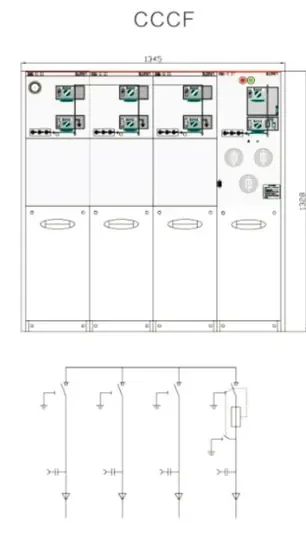
GSRM6 Gas-Insulated RMU
Compact SF6 ring main unit with load switch, fuse combination and vacuum breaker modules in a shared tank. The default choice for underground and space-constrained MV distribution.
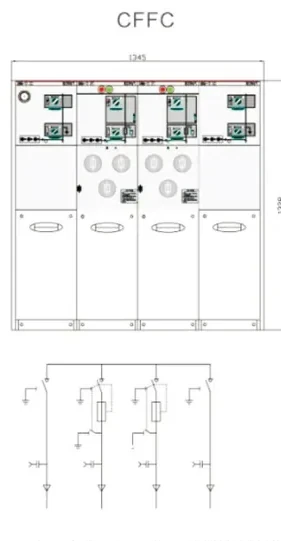
GSG2-12 Solid-Insulated RMU
Epoxy-solid insulated vacuum switchgear — fully sealed and maintenance free. Best where humidity, salt and pollution make gas monitoring a liability rather than a feature.
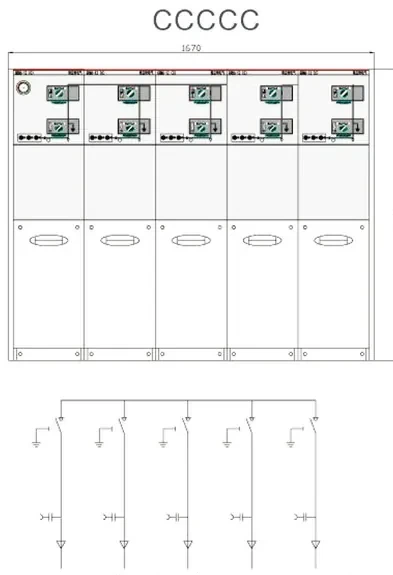
GSM6-12/24 Unit-Type RMU
SF6 load-break switch as main switch, metal-enclosed and extensible. Designed for distribution automation with FTU / RTU and four-remote control.
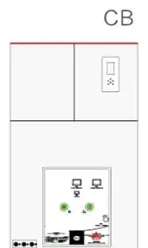
HXGN15-12 Air-Insulated RMU
Fixed-type air-insulated ring main unit with vacuum load-break switch and spring mechanism. Economical for indoor terminal supply and retrofit projects.
Rated data side by side
Values below are typical for the standard configuration. Final figures follow the type-test report issued for your order.
| Parameter | GSRM6 | GSG2-12 | GSM6-12/24 | HXGN15-12 |
|---|---|---|---|---|
| Insulation medium | SF6, sealed tank | Epoxy solid | SF6, unit type | Air |
| System voltage | 11 / 13.8 / 22 kV | 11 / 13.8 kV | 11 / 13.8 / 22 kV | 11 / 13.8 kV |
| Rated current | 630 A | 630 A | 630 / 800 A | 630 A (LBS) / 125 A (combined) |
| Short-time withstand | 20 kA / 4 s | 20 kA / 3 s | — | 20 kA |
| Short-circuit breaking | 20 / 25 kA | 20 kA | — | 31.5 kA |
| Peak withstand | 50 / 63 kA | 50 kA | 80 / 63 kA | 50 kA |
| Closed-loop breaking | 630 A | 630 A | 63 / 50 A | 630 A |
| Module width (12 kV) | 325 mm | 325 mm | — | — |
| Extensible | Yes | Yes | Yes | Fixed |
| Protection class | IP2X (indoor) | IP2X interior, IP67 tank | IP2X | IP2X |
| Ambient temperature | −40 … +40 °C | −40 … +40 °C | −5 … +40 °C | −15 … +40 °C |
| Typical use | Underground, coastal, cramped vaults | Humid, saline, polluted sites | Automation-heavy networks | Indoor terminal supply |
— = not applicable or not published for this configuration. Confirm all values against the type-test report before tendering.
Six questions that decide the platform
System voltage
12 kV and 24 kV are the common distribution levels; 36 kV appears in 33 kV networks. Choose the platform that covers your nominal voltage with margin, not the one with the highest rating.
Fault level
20 kA covers most urban loops. Above 25 kA, move to the vacuum-breaker module or a C-GIS with a higher rated breaker instead of forcing an RMU above its class.
Available room
325 mm per module at 12 kV is the number that decides feasibility. Measure the vault before choosing the medium — a 900 mm air-insulated panel will not go where an RMU fits.
Environment
Salt fog, 95% RH, altitude above 1500 m or heavy pollution all push toward solid insulation or a sealed SF6 tank with a documented leak rate.
Automation
If the network needs remote control, specify FTU / RTU compatibility, motor-operated mechanisms and the communication protocol at enquiry stage — retrofitting later costs more.
Expansion path
An extensible busbar lets you add modules when the load grows. A fixed unit is cheaper today and expensive tomorrow if the loop gets another feeder.
Where these units are installed
Utility ring networks
Loop supply, double supply and switching kiosks for 12–33 kV urban distribution.
Solar & wind
Collector circuits and grid-tie interfaces at inverter and turbine stations.
Industrial plants
Steel, cement, chemical, mining — high fault level, harsh ambient, limited room.
Underground & transit
Metro, tunnel and basement vaults where every square metre is rented.
One roof, from coil to test certificate
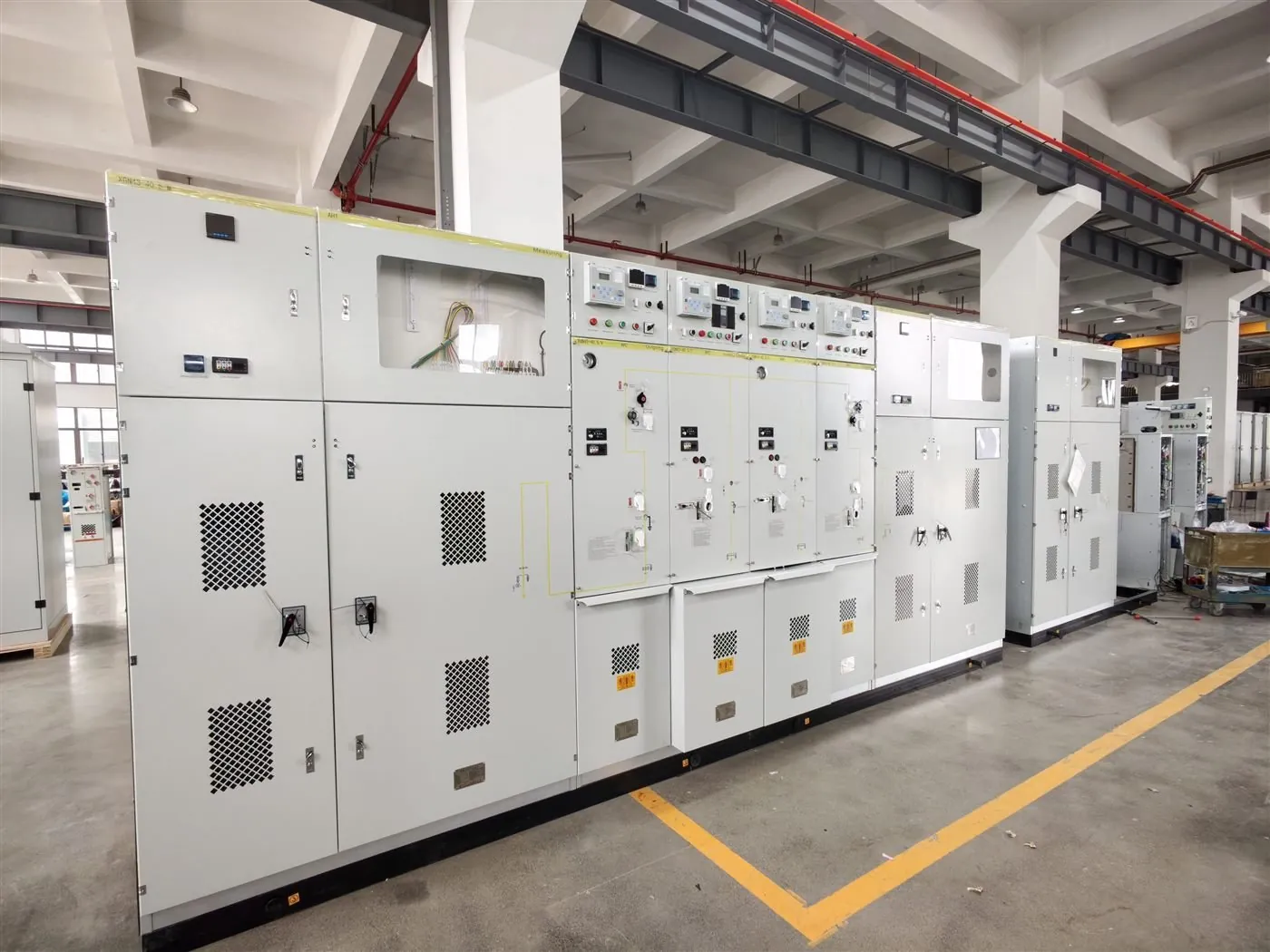
Sheet-metal forming, welding, gas filling, leak detection and routine testing are collocated, so non-standard module widths and OEM branding stay inside a normal lead time.
Tested to the clause, not to the brochure
Metal-enclosed switchgear
Ratings, interlocks, IP classification, internal arc and loss-of-service-continuity category.
Load-break switches
Closed-loop and cable-charging breaking currents — the two values buyers should always ask for.
Circuit breakers
Breaking and making capacity, operating sequence, mechanical endurance.
Process records
Material, welding, gas-filling and test records archived per serial number.
Not sure which platform fits your room?
Send the vault dimensions and the single-line diagram. We will return a module layout, not a catalogue page.